| JOHNSON
RADIO CATALOG - SCAN courtesy of K5JWK; catalog courtesy of Johnson
CARDWELL VHF-UHF OSCILLATOR (This uses acorn tubes) From the E. Sharpe collection at SMECC |
||||||||||
|
||||||||||

|
||||||||||
|
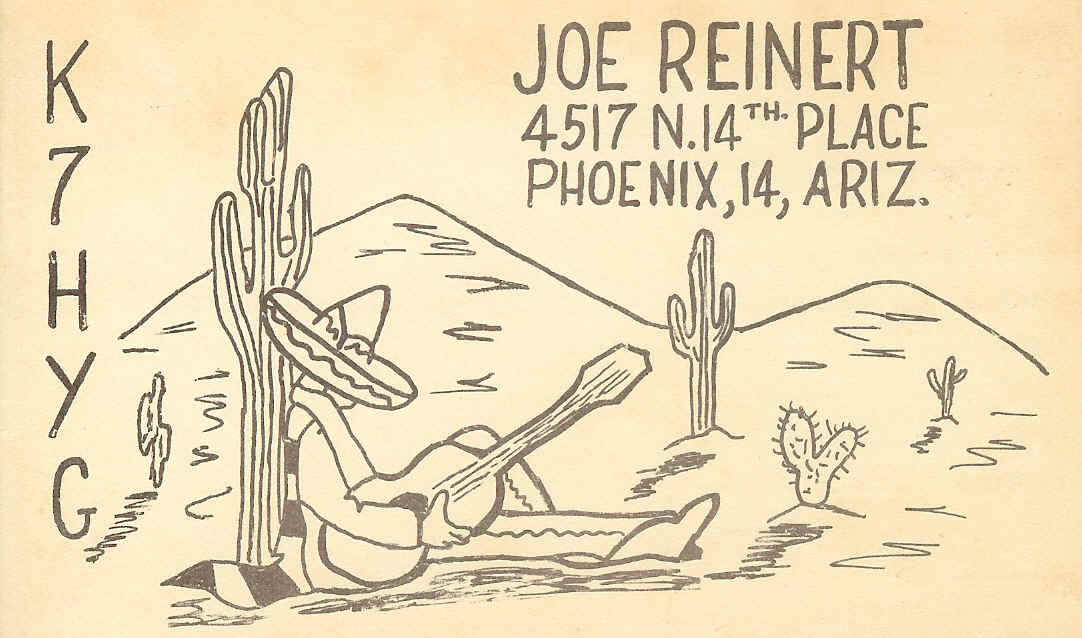
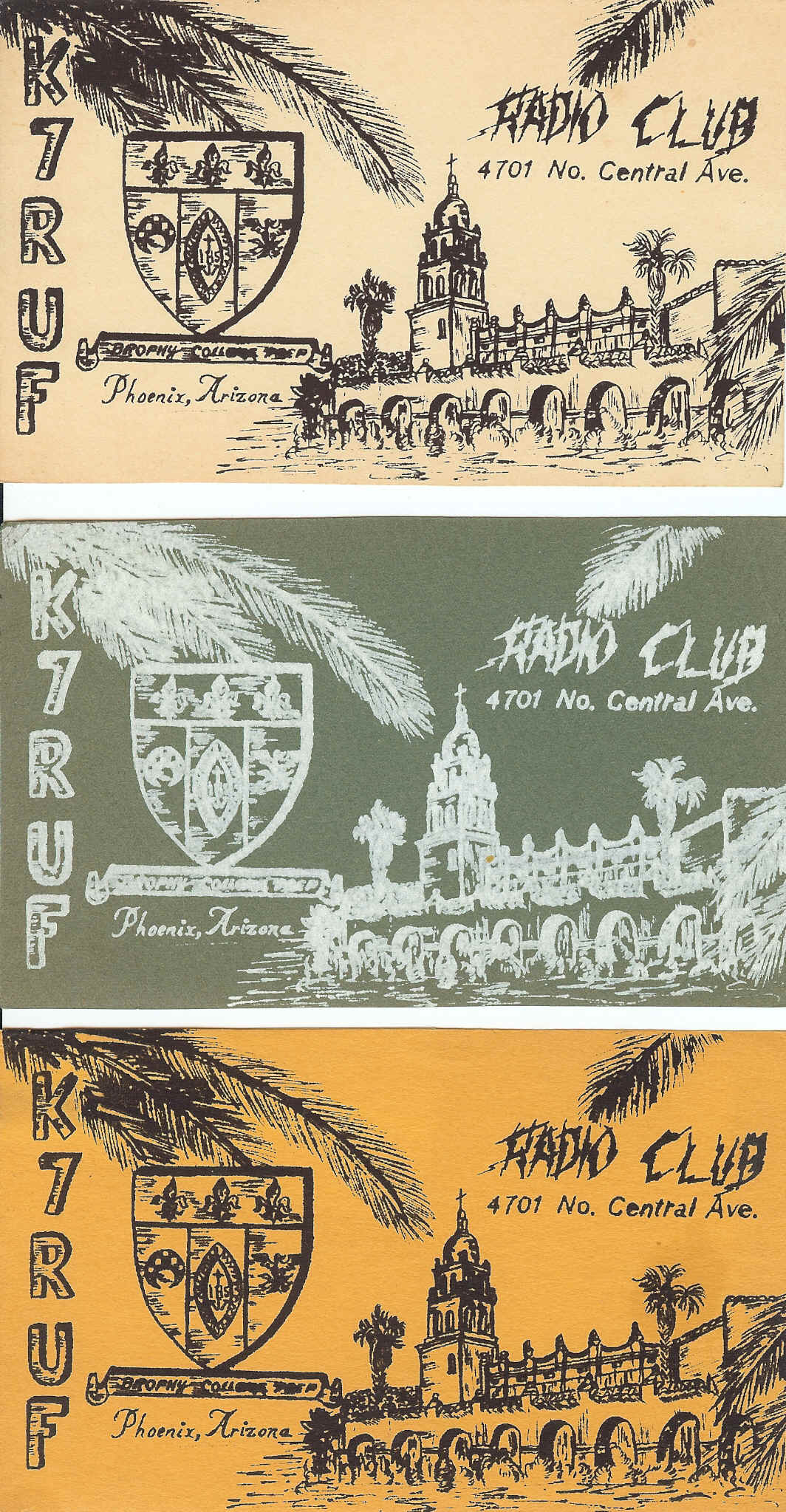
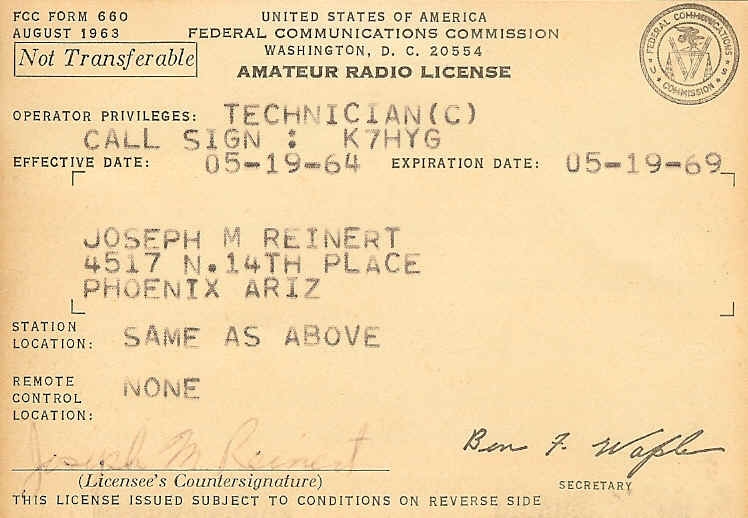
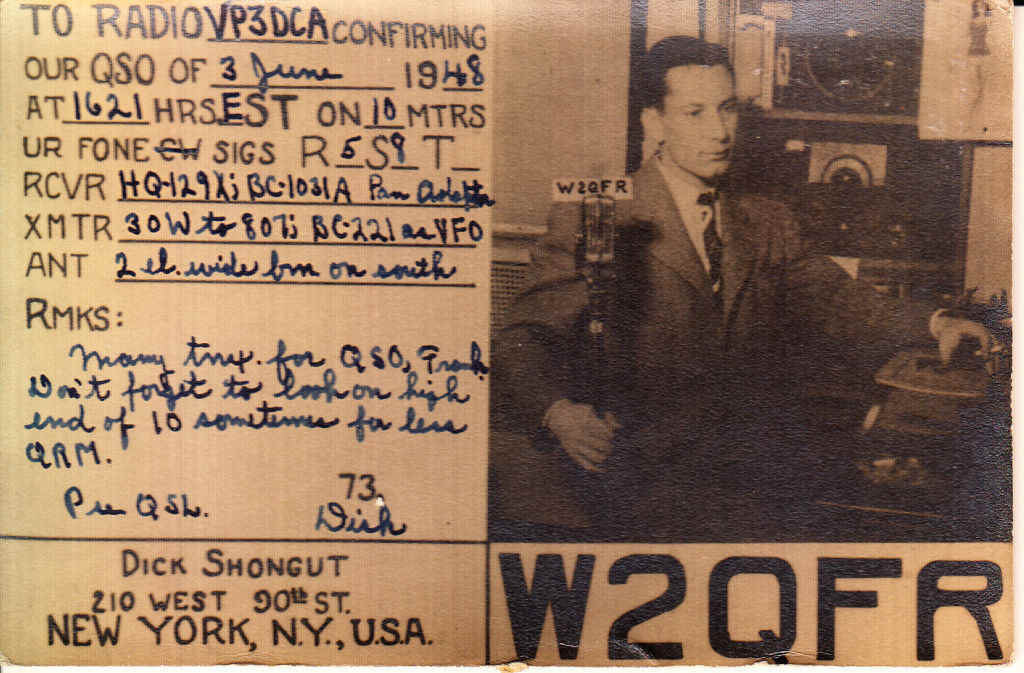
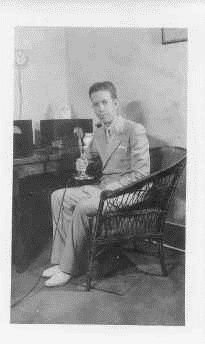
Photographs and Cards Click above to go visit Capt. Edwards...
|
||||||||||
|
At The Museum...
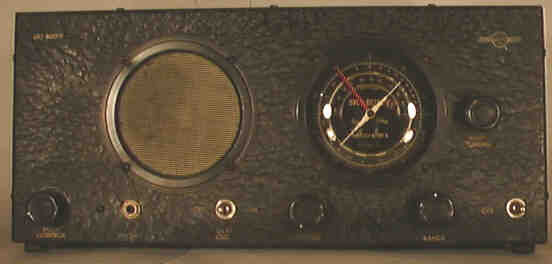 1936, 6 tubes, 3 bands, orig. $29.95
We have one! we need: A set of Finals Set of HV cables Antenna Relay 75A4 Receiver to match with it
|
||||||||||
|
The history of the Rubber Ducky Antenna. I've read a lot about "Rubber Ducky" Antennas on the Web and it seems that nobody knows where they came from! It seems that many people think that they are just some natural outcome of a typical engineering design. In fact, if a Rubber Ducky Antenna did not already exist, and you put a bunch of Engineers, Mathematicians, and Physicists in a design conference and asked them to design one, they would properly claim that it couldn't possibly work. When I was at the Lyman School in Westborough Massachusetts, a reform school for juvenile delinquents, I operated a Ham Radio Station on the 6-meter phone band. My call sign was K1KLR. Because space was a premium, I was unable to have an outside antenna. Therefore, I invented what became known as the "Rubber Ducky Antenna". It was first called a cantenna long before Heathkit borrowed the name for a dummy-load. It was published in QST Magazine sometime around 1958 by my mentor, Mr. Guido Sandini, who was the cottage master at Westview Cottage at Lyman. Mr. Sandini was a well-known "ham" who taught a "ham-radio" class at the Lyman School. This is the story about that invention. I was kind of a privileged character at Lyman, having already "done my time" and awaiting out-placement. I became part of a successful program where such persons were allowed to attend "outside school" in Westborough. After returning from outside school each afternoon, I was supposed to use a small room at the front of Lyman Hall for my homework studies. After I would barely complete my homework, I would set up my Ham Radio station and attempt to communicate with others in the Westborough area. I didn't have a place to install an antenna so I would connect the shield of a co-axial cable to the screen of a screen-door, poke the center conductor through a hole in the screen, then attach a 1/4 wave-length wire to that. This would dangle outside and sometimes work as an antenna. Some hams would refer to this makeshift antenna as "loading up a screen-door". At one time I thought I heard the words "screen-door spring". This make me think. The problems with the wire dangling through the screen were that it was too long and it wasn't properly oriented for a good antenna. So, my first attempt at a rubber-ducky antenna was what I called the "cantenna". This consisted of a paint can which I filled with rocks for support. To the top of the can I soldered 4 radials of brazing rod. Their length was determined by the size of the floor of the closet where I would store this contraption. In the center of the can-lid I installed a coaxial connector so that the solder connection was oriented upward from the top of the can and outside the can. I Punched a hole in the side of the can so that I could insert the coaxial cable from the transmitter and receiver T/R relay. I soldered a section of a screen-door spring to the center conductor of the coaxial connector. I found that the spring needed to be only about 10 inches high after I had stretched it so that none of the turns touched each other. This was tuned, with the transmitter at low power, by adjusting the length so that a neon bulb would illuminate when brought near the top of the spring and an inductive loop coupled to a light-bulb would light the bulb when brought near the base of the spring. After scratching my eye while taking my portable antenna down, Mr. Sandini suggested that the spring be put inside a piece of windshield-wiper hose. Since we didn't have "shrink-tubing" in those days, this was difficult to do until I threaded a wire through the spring and used it to pull the spring through the tubing from the bottom of the spring so it wouldn't distort and stretch out the antenna. Mr. Sandini made some further experiments with my antenna, in fact making one that required no ground radials at all. It was just a spring in a rubber hose with a banana plug on one end. This would plug into the top-of-the-box antenna connector on the portable transceivers used by the Civil Defense, the Gonset Communicator III. He made several for both the six and two meter amateur radio bands. After using this antenna successfully at a "Ham Fest" in Swamscot, Massachusetts, Mr. Sandini published an article about it in the QST magazine. Now, neither Mr. Sandini nor myself knew why the spring worked as an antenna. My first thought for the design was that I needed a spring that, when stretched out, would be 1/4 wave-length long to emulate a 1/4 wave-length whip. I carefully calculated the stretched-out length of a spring from its circumference and wire diameter. Imagine my surprise when I found out that the thing would resonate, produce better than a 2:1 VSRW, and actually function as an antenna, when about 1/6 the calculated length! Then it was thought that it was the resonance alone that made it antenna-like. However, this wasn't true because good coils don't radiate very much energy (they are low-loss). Then it was thought that the thing just acted like a base- loaded whip. This turned out to be untrue as well. Basically, the Rubber Ducky can't work as well as it does. A well-constructed Rubber Ducky has a base impedance near 50 ohms. This is dependent upon the ratio of the diameter to length. It also has about 10% bandwidth. This is dependent upon the spacing of the turns, the closer the spacing, the lower the bandwidth. It also has an aperture that is over twice its physical size. This is the real anomaly. No other antenna has an aperture greater than its size. After I left Lyman School, I started a career that has spanned over 4 decades of successful Engineering Design. I have moved from Radio Transmitter design through medical Ultrasound design to Software Design for CAT Scanners and Airport Baggage Scanners. Every time I see somebody with a Cell-Phone, I remember those beginnings. Now, if I had only Patented the damn thing! I read about the origin of the name "Rubber Ducky". It was originally called a cantenna and then a vertical helical, neither of which really defined the antenna. I think it was Caroline Kennedy who gave it its name when pointing to one on the top of a secret service security guards transceiver. Cheers, Richard B. Johnson Project Engineer Analogic Corporation |
||||||||||
|
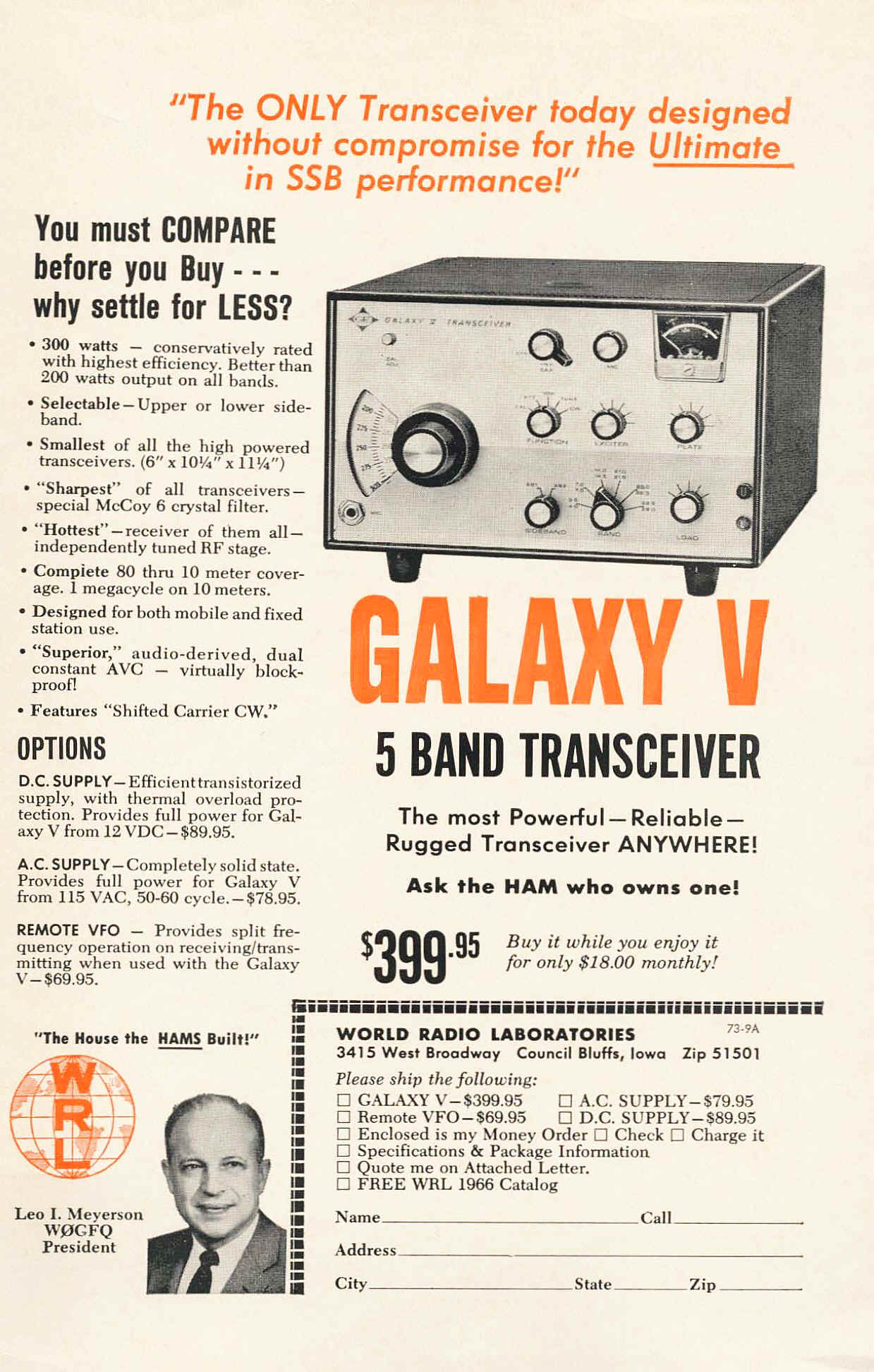
We have a Galaxy V need a power supply though wither
12 v or 115 volts. |
||||||||||
| Below are a few other things we have in the collection! We are looking for manuals and accessories for most of them! | ||||||||||
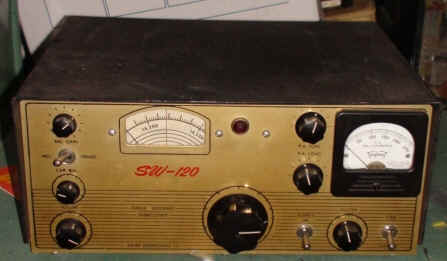 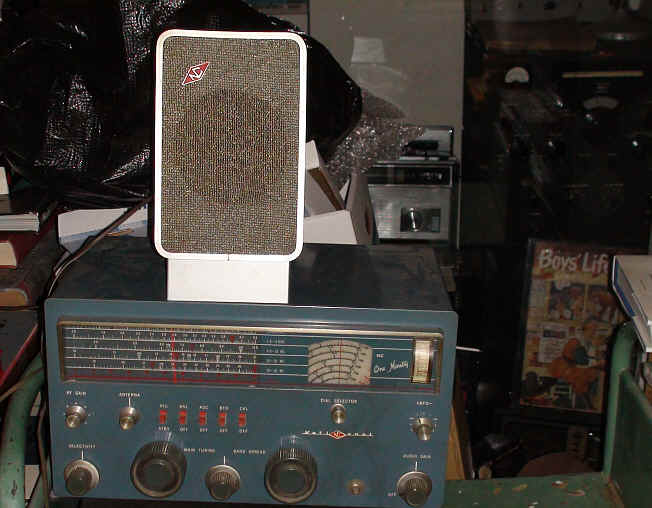
Swan SW120 National NC-190 receiver with matching speaker |
||||||||||
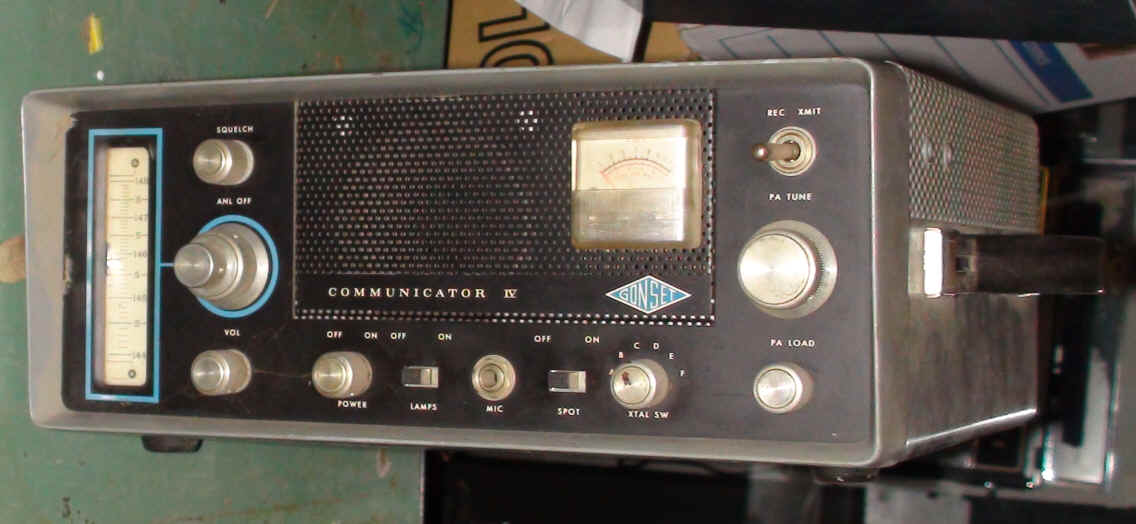
Gonset Communicator IV Yes defetly need manuals for this
one! |
||||||||||
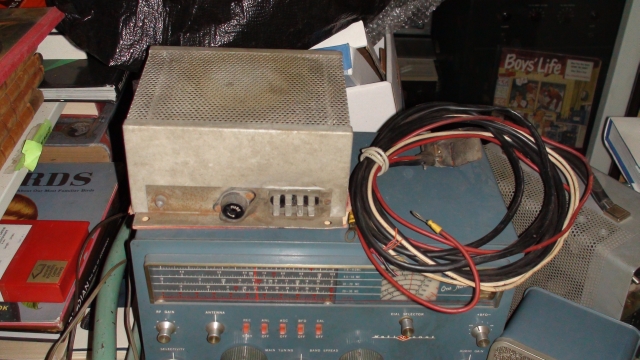 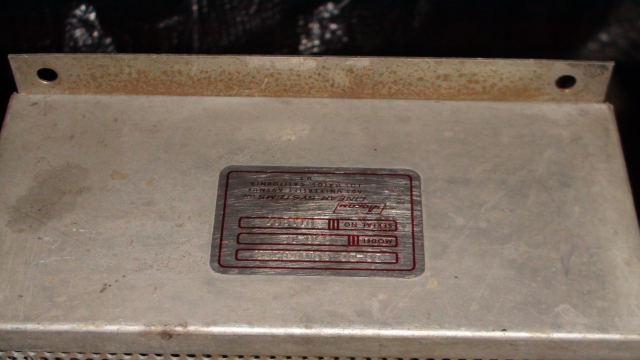
Power supply for???!?! the Swan maybe??? Help..... |
||||||||||